
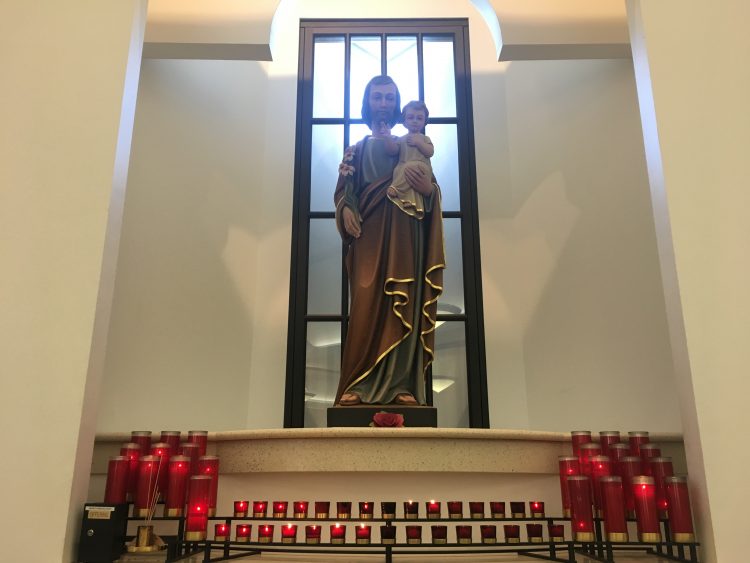
In my most recent post, which is also my very first post, I offered a quick shout-out to Saint Joseph and the lilies he is often depicted with. Among titles such as “Terror of Demons” and “Pillar of Families,” the beloved saint is also called upon as “Joseph Most Obedient.”
Obedient to what?
To his wife? His child? His whole family? His work? The community? God? God’s Church? God’s commands? God’s will?
A dozen spiritual lilies goes to those who select “all of the above (and more)” as the best answer, although this option goes without being listed.

There are almost as many symbolic ideas associated with the lily as there are special titles associated with St. Joseph. Obedience, or faithfulness, is represented by the elegant flower, along with a happy or peaceful death, which is by no coincidence another one of Joseph’s patronages. With so much of value to remain obedient to, we can imagine Joseph was rewarded for his faithfulness.
In heaven, certainly he is, beyond our imagining; but did he receive any immediate rewards in his earthly life? In some spectacular ways, I’m sure he did. Yet history and Tradition suggest Joseph died before his wife and adopted Son. What a blessing it would have been to have died with Mary and Jesus by your side, but what a disappointment it might have been to have died before the Resurrection. That is, if Joseph believed there would be a Resurrection. Not all first century Jews did.
Here is what I suggest:
If Joseph died before Jesus’ Resurrection and did not suspect either one of them would rise from the dead, he had to have had great faith (no doubt a fruit of his obedience) that his wife’s Son was nevertheless the prophesied Messiah–the One, True God of Life. If Joseph died before Jesus’ Resurrection but believed it would still occur, he had to have had great hope that he would see the face of God again and that death was not “the end.” Either way, Joseph comes out looking like a saint.
Fortunately for us, he is.
 Stop to Smell the Flowers